Showing posts with label 2 Nights Stay. Show all posts

Monday, 16 September 2013

An Ubizane Moment

We recently ran a competition for all guests who've stayed at Ubizane before.  Guests were encouraged to send in their photographs that they took on their trip to the reserve.  We wanted guests to show their Ubizane moments! Today we chose winners! The votes were tied and because of the beautiful photo's that were sent in we decided that we need TWO winners! So in the nature category we have chosen Gary Roper for his beautiful photo of a sunbird on an Aloe flower. And for the portraits category we chose the stunning photo of Shirley Groenewald!  Thank you to all who participated! We cannot wait for the next competition!


Gary Roper and Shirley Groenewald each wins a
2 night stay for 2 people at  Zululand Safari Lodge!
CONGRATULATIONS!!!

Sunday, 26 August 2012

Competition Questions:


       1.  Who is Shimba and where is her favourite hang out?
 
2. Chaulmoogra oil is from which tree and what was it used to treat in the late 1800′s and   early 1900′s?
 
3. True or False:  You can now get wireless interest access as soon as you drive through Ubizane’s gate? 
 
4. What percentage of Ostrich chicks survive to see their 1st birthday?
 
5. How many cheeses are served on an Ubizane cheese platter?  


E-mail your answers and contact details to social@ubizane.co.za 


Saturday, 25 August 2012

Ubizane’s unofficial mascot:


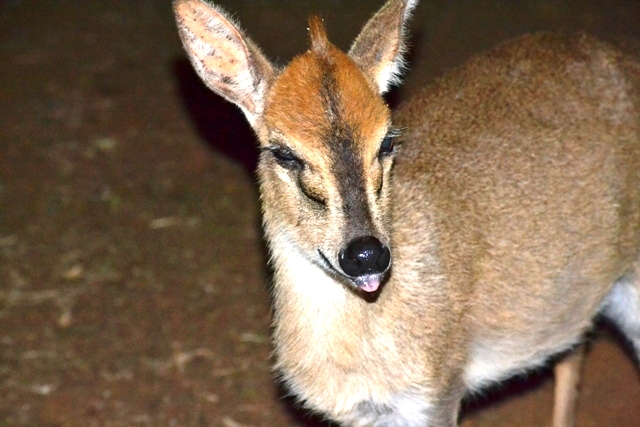
If you have been to Ubizane Wildlife Reserve, you may have had the pleasure of meeting Shimba, or most probably heard the numerous tales of her presence and daily antics via the staff. 


 Our tame, though still wild Common Duiker, Shimba has been part of the family for as long as any of the staff can remember. Gradually becoming more and more relaxed around people over the years, Shimba along with the not so little Tiban are the only animals we feed on the reserve.  

The Grey or Common Duiker is typically a very shy animals, sticking to areas that provides lots of cover. Grey or Common Duikers are known to be monogamous (having only one partner) this brings a comforting thought to all of us here at Ubizane, as we know somewhere on the reserve Shimba might have a partner!

Her favorite hangout is the Staff quarters where she has her own dinner party almost every night; strolling from one house to the next getting ever so tasty snacks and scrap vegetables from anyone around at the time. You can almost certainly set your watch to her arrival, it’s as if she knows when you are going to be home from work and preparing dinner.   


Over the years Shimba has become increasingly brave and given half the chance she comes into your house and has a good sniff around. Lately her favourite obsession is to stand by the fridge and give you the sweet ‘puppy dog’ face, hoping you will give her more delicious treats – who could resist?! A favourite with guests and staff alike, Shimba has become a part of the family and Ubizane’s very own mascot. 


Friday, 24 August 2012

Extending our Family:


One of our gorgeous female ostriches is about to become a Mom! We could hardly believe our eyes when we came across her nest, or more accurately just a simple hollow in the ground. Ostriches generally nest communally, so we are very excited to see if the other ostriches will join the nest.   

Laying up to 20 eggs the female Ostrich is able to distinguish between her own eggs amongst the others in a communal nest. The glossy cream coloured eggs average 15cm long and 13cm wide, and can weigh up to 1.4 kilograms in weight. Interestingly the yolk of an ostrich egg is the largest single cell but the smallest egg relative to the size of the adult bird. 


The clutch is incubated mainly by the female during the day and by the male during the evenings. This is a rather ingenious way of sharing a duty, as this uses the colouration of the two sexes to blend into the natural environment and prevent the detection of the nest. The female with her drab plumage blends in with the sand, while the black male is nearly undetectable in the night. The pair shares the incubation process for 35 to 45 days. Typically, the male defends the hatchlings and teaches them to feed, although males and females cooperate in rearing chicks. Fewer than 10% of nests survive the 9 week period of laying and incubation, and of the hatched chicks, only 15% of those survive to 1 year of age. 


We are hardly able to contain our excitement, as we anticipate the arrival of our ostriches chicks. Watch this space as there will soon be new hatchlings running around here at Ubizane, extending our feathered family one step further! 


Thursday, 23 August 2012

What’s in a name?


When it comes to trees Ubizane has definitely got them in abundance, however have you ever thought how many there are, what is in a name and if there are special uses for them?

I was fortunate enough to accompany Darius, our on-site ecologist and Denis Oscroft a member of the Kwazulu Natal Tree Society, as they ventured around Safari Lodge identifying and labeling an array of foliage most unique to Ubizane.  


A selection of trees along the winding Safari pathways was identified and a name plate made by WESSA (Wildlife and Environment Society of South Africa) was attached. These name plates have the scientific, common and Zulu name, as well as the national number of that particular species. This allows the guest (as well as the ever curious Ubizane team) to easily look up the tree in a book. 


As we passed by certain trees, Darius and Denis gave interesting facts about each particular specie. My favourite example was that of the Snuff Box Tree - when the tree flowers the flowers resemble a fried egg and the fruit of the tree has many traditional uses. The tree is a source of chaulmoogra oil, valued for its medicinal properties and originally used to treat leprosy around the world in the late 1800′s and early 1900′s.  As the name suggests the fruit can be used, once hollowed out, to store snuff inside. 


It was a morning well spent, as now most of the visible trees on the pathways in and around Safari Lodge have names, and it is difficult NOT to learn about these fascinating plants. 


Wednesday, 22 August 2012

Temptation on a plate:


Dinner at Ubizane is always a much talked about event, whether it be in the boma, the bush or the restaurant, the one certainty is that our chef’s food never disappoints!

This week it was the cheese platter that stole the show with luscious, buttery, soft, gourmet Camembert and Brie accompanied by dried fruit and biscuits, delicious homemade Beetroot Cream Cheese, a mature blue cheese, finished off with an Orange Marmalade which was of course also homemade.

For those of you who are not so familiar with the gourmet French cheeses, here is a basic rundown:
So despite the obvious that Brie and Camembert are different cheeses, they both have one essential thing in common: milk. Brie however, was originally made in an area South-East of Paris where the cattle grazed on stony river beds. Camembert on the other hand originated in the West, near the coast in Normandy, where a different breed of cattle grazed on lush green pastures.
That being said the two cheeses are very similar in their soft white colour and similar consistency.

Here at Ubizane every meal is completed with a very special cheese board. All our cheeses are locally sourced and often infused on site. Go ahead: indulge.  


For more information on this tasty cheese platter and all the other delicious food Lance our chef makes, be sure to follow Diary of a bush chef on www.diaryofabushchef.blogspot.com