Showing posts with label forest. Show all posts

Tuesday, 14 August 2012

Afternoon High Tea in Tree Lodge Forest:


It seems that all the happenings are occurring in Tree Lodge lately. Its 14h30 on Friday afternoon, the cool shade of the Fever trees provides an ambient atmosphere within the Fever tree forest, the distant knocking of a woodpecker breaks the afternoon’s tranquility. The guests slowly amble down to the forest for afternoon high tea.
Encircled by chairs, the refreshment table is the centre of attention within the forest where a selection of tea, coffee, fruit juices and delicious eats we freshly prepared and waiting.  


In the distance warthogs are intrigued by the movements in the forest and stare in amazement, while the Nyala (as calm as ever) peacefully grazes nearby. It is not long after everyone has had their refreshments that the ever boisterous ban of monkeys arrives, startling the guest a little with their fearless attitudes. 


The Ubizane team had to step in when one monkey got a bit too close for comfort, and tried his luck at have a taste of a guests snack. Thankfully he was stopped in his tracks and the guests had a good chuckle at his efforts.
This just goes to show that there is never a dull day here at Ubizane! 


Striking up a Fever:


Possibly one of the most striking features of Ubizane is the Fever Tree forest at Zululand Tree Lodge, we have spoken many times about the nest that are built in its branches and even the high tea that is hosted amongst it. It got me thinking, how these beautiful trees got its unusual name? For those more technically inclined you might know the fever tree as Acacia xanthophloe, which is its scientific name but the Fever Tree does quite fine for the rest of us.  


The pioneers believed that Fever Trees were the cause of malaria outbreaks, as the swampy marshes where the Fever Trees grew were ideal breeding grounds for the Anopheles mosquitoes, which are responsible for malaria.
It was eventually proved that Fever Trees had absolutely nothing to do with malaria. The only thing the wrongfully accused Fever Trees shared with the real malaria culprits, the female Anopheles mosquitoes, is a love of swampy areas. 


Nevertheless the story goes that locals would lie down in the shade of the tree to escape the burning sun. Invariably, they would fall asleep and would wake up covered in mosquito bites which would often lead to the onset of malaria. Thus the myth was born and the Fever Tree got its name. 


Saturday, 11 August 2012

Lucky number 13


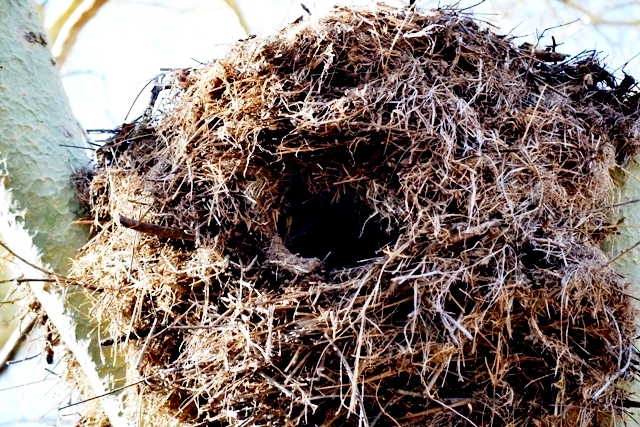
Many who are superstitious may believe that 13 is number of doom and gloom, bringing on bad luck. Here at Ubizane we believe quite the opposite, as room 13 in tree lodge overlooks a colossal Hamerkop Nest that is wedged between 2 branches of a Fever tree.  


 The Hamerkop is amply named after its hammer shaped head. Not much to look at, with its dull brown plumage and long flat bill, the Hamerkop nest is often a bigger attraction than the bird itself. 


 Being  compulsive nest builders, Hamerkops can build 3 to 4 nests a year regardless if they are breeding or not. These nests are constructed from sticks, reeds, grass and other dead plant material, which can weigh in at a staggering 24 to 49 kilograms and often built on or near river banks. This nest building process can take up to 4 months and easily support a human’s weight.

Once the colossal nest is complete, both the male and female will incubate the clutch which generally consists of 3 to 7 eggs, for 28 to 30 days and by day 44 to 50 the young will leave the roost permanently. 
Snakes, small mammals such as Genet, and various birds live in the abandoned nests. Weaver birds,Mynas and Pigeon may attach their nests to the outside of the nest.   


There are many legends and beliefs surrounding the Hammerkop and its nest.  It is known in some cultures as the lightning bird and the Kalahari Bushmen  believe or believed that being hit by lightning resulted from trying to rob a Hamerkop's nest. They also believe that the hostile god Khauna would not like anyone to kill a Hamerkop. According to an old Malagasy belief, anyone who destroys its nest will get leprosy. Such beliefs have given the bird some protection, making them a common resident throughout Africa.