Tuesday, 14 August 2012

Afternoon High Tea in Tree Lodge Forest:


It seems that all the happenings are occurring in Tree Lodge lately. Its 14h30 on Friday afternoon, the cool shade of the Fever trees provides an ambient atmosphere within the Fever tree forest, the distant knocking of a woodpecker breaks the afternoon’s tranquility. The guests slowly amble down to the forest for afternoon high tea.
Encircled by chairs, the refreshment table is the centre of attention within the forest where a selection of tea, coffee, fruit juices and delicious eats we freshly prepared and waiting.  


In the distance warthogs are intrigued by the movements in the forest and stare in amazement, while the Nyala (as calm as ever) peacefully grazes nearby. It is not long after everyone has had their refreshments that the ever boisterous ban of monkeys arrives, startling the guest a little with their fearless attitudes. 


The Ubizane team had to step in when one monkey got a bit too close for comfort, and tried his luck at have a taste of a guests snack. Thankfully he was stopped in his tracks and the guests had a good chuckle at his efforts.
This just goes to show that there is never a dull day here at Ubizane! 


Striking up a Fever:


Possibly one of the most striking features of Ubizane is the Fever Tree forest at Zululand Tree Lodge, we have spoken many times about the nest that are built in its branches and even the high tea that is hosted amongst it. It got me thinking, how these beautiful trees got its unusual name? For those more technically inclined you might know the fever tree as Acacia xanthophloe, which is its scientific name but the Fever Tree does quite fine for the rest of us.  


The pioneers believed that Fever Trees were the cause of malaria outbreaks, as the swampy marshes where the Fever Trees grew were ideal breeding grounds for the Anopheles mosquitoes, which are responsible for malaria.
It was eventually proved that Fever Trees had absolutely nothing to do with malaria. The only thing the wrongfully accused Fever Trees shared with the real malaria culprits, the female Anopheles mosquitoes, is a love of swampy areas. 


Nevertheless the story goes that locals would lie down in the shade of the tree to escape the burning sun. Invariably, they would fall asleep and would wake up covered in mosquito bites which would often lead to the onset of malaria. Thus the myth was born and the Fever Tree got its name. 


Saturday, 11 August 2012

Lucky number 13


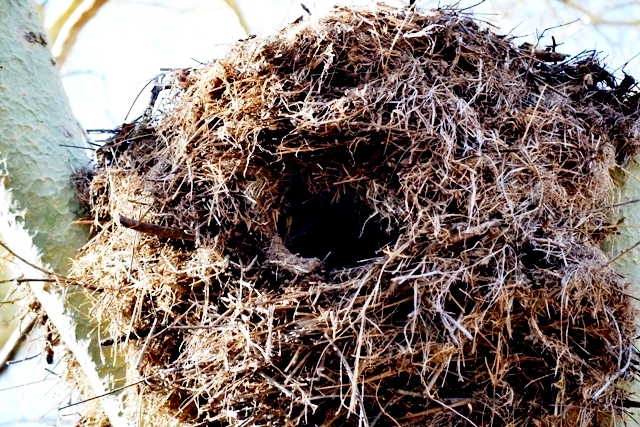
Many who are superstitious may believe that 13 is number of doom and gloom, bringing on bad luck. Here at Ubizane we believe quite the opposite, as room 13 in tree lodge overlooks a colossal Hamerkop Nest that is wedged between 2 branches of a Fever tree.  


 The Hamerkop is amply named after its hammer shaped head. Not much to look at, with its dull brown plumage and long flat bill, the Hamerkop nest is often a bigger attraction than the bird itself. 


 Being  compulsive nest builders, Hamerkops can build 3 to 4 nests a year regardless if they are breeding or not. These nests are constructed from sticks, reeds, grass and other dead plant material, which can weigh in at a staggering 24 to 49 kilograms and often built on or near river banks. This nest building process can take up to 4 months and easily support a human’s weight.

Once the colossal nest is complete, both the male and female will incubate the clutch which generally consists of 3 to 7 eggs, for 28 to 30 days and by day 44 to 50 the young will leave the roost permanently. 
Snakes, small mammals such as Genet, and various birds live in the abandoned nests. Weaver birds,Mynas and Pigeon may attach their nests to the outside of the nest.   


There are many legends and beliefs surrounding the Hammerkop and its nest.  It is known in some cultures as the lightning bird and the Kalahari Bushmen  believe or believed that being hit by lightning resulted from trying to rob a Hamerkop's nest. They also believe that the hostile god Khauna would not like anyone to kill a Hamerkop. According to an old Malagasy belief, anyone who destroys its nest will get leprosy. Such beliefs have given the bird some protection, making them a common resident throughout Africa.  


Friday, 10 August 2012

Birds of a Feather:


Many of our guests tend to feel a tad bit intermediated by the presence of Ostriches, as many of you who have been to Ubizane know they have become somewhat of a regular occurrence here both at Tree and Safari Lodge. 


 Noticing movement by Safari Lodge, one of the females decided to pay us a visit, after breakfast. We had guests from a Bat Mitzvah, and the children were so intrigued by the Ostriches’ presence in and around the lodge. 


The guests were fascinated when Tiaan one of the Managers helped them to touch the Ostrich, and answered many of their questions. Some of which consisted of: “Is it it a girl or a boy?”, “Where is her Boyfriend?”  And “Do Ostriches eat meat?” to name a few! Tiaan patiently answered all their questions, no matter how silly they may have seemed and even added some interesting facts here and there. 


Some guests were a little more adventurous than others and gave the Ostrich a stroke or two, while others just watched from a distance. 


Out with the old and in with the new:


At Ubizane Wildlife Reserve, we are constantly improving our image, in order to make your bush break or holiday as spectacular as we possibly can!
For about a month now we have been busy re-thatching our rooms at Tree Lodge, room 1 to 12 have all been given a revamp, due to them taking a real beating from the weather and of course the ever mischievous monkeys.


The continuous movement and displacement of the old thatch has stirred up quite an interest among the Ubizane wildlife. The ever watchful female Ostrich has also chosen Tree Lodge rooms 1 to 12 as her new favourite hang out, safely guarding the new heap of thatching grass. As watchful as ever and giving her unofficial seal of approval on the new rooms.   


The Mischievous Monkeys always seem to be in a million places at once, but thankfully the excitement of re- thatching the rooms have kept them away from the Tree Lodge restaurant, for now anyway.
The uplifting of the old weather worn thatch has disturbed a few ecosystems I’m sure, and this provides a tasty snack for this tricky troop of monkeys.
In the distance a sounder of warthogs are also drawn to the hive of activity that is taking place at the Tree Lodge rooms.


During the re-thatching process, the Ubizane staff goes through every single room with a fine tooth comb, from top to tail ensuring that the standard is no less than faultless. Going the extra mile to ensure that we provide the best possible experience for you and your loved ones on your bush break. 


Wednesday, 8 August 2012

The Berzack Bat Mitzvah


The celebrations began on Friday, with family members from the United States, United Kingdom, and Australia and all over South Africa arriving throughout the day. After welcome drinks, some enjoyed a relaxing afternoon while others had an educational trip to Emdoneni, the cheetah sanctuary. After freshening up, everyone reunited at Tree Lodge where they had Shabbat and prayers followed by a short welcome speech before a kosher buffet dinner was served.

Saturday commenced with the family gathering by the pool at Safari Lodge, where refreshments were served. The typical dry winter backdrop was brought to life by the eventful flurry of children and elegantly set tables, adding an entertaining atmosphere to the early afternoon’s pre-celebration.  


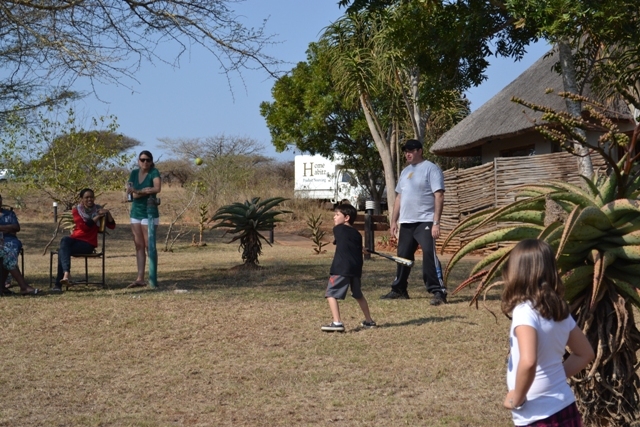
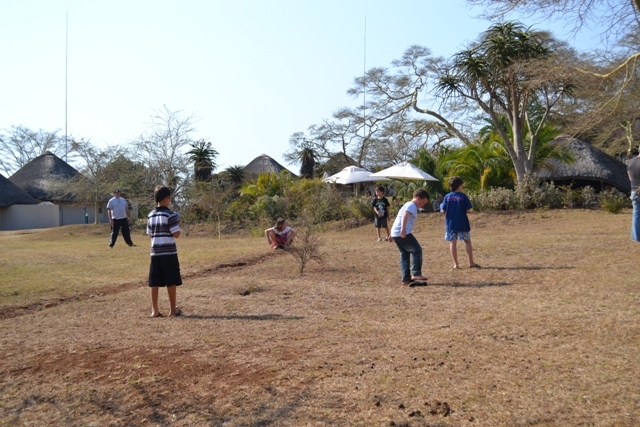
A quick game of baseball entertained both the spectators and players, working up a healthy appetite before lunch.
A delicious cold lunch was served alongside one of the many watering holes we have surrounding Safari Lodge. The bare weather stricken branches provided sufficient shade as the family enjoyed the buffet style lunch of Brisket, Cold Meat, Salads and a selection of Fruit. 


Zulu dancers provided a truly South African experience with their beating drums and traditional costumes. After a short demonstration of their refined skills, the dancers selected members from the somewhat astonished audience to join in and truly experience Africa first hand by participating in a traditional Zulu dance. The younger family members proved to be truly remarkable, with their eagerness and uncanny flexibility, and at times even giving the Zulu dancers a run for their money.


The main celebration took place in the Boma, where tranquil candles lead the way to a welcoming fire in the centre. Blue lanterns, candles and serviettes added a splash of colour to the Boma that was warmly lit with soft fairy lights that gently draped the surrounding walls of the Boma. 


The guests soon arrived and before long they came sweeping into the Boma, in their elegant attire gathering around the crackling fire, warming up before celebrations begin. After all the formalities, a lovely montage of a beautiful girl, who has now become a woman, was viewed. After which every one loosened up on the dance floor, before enjoying a kosher buffet dinner. 


The toasting of marshmallows over a sizzling fire drew the night to a close and a beautiful evening shared between family and friends, who united under an African sky to mark such a special occasion came to an end.


Monday, 6 August 2012

Neither Lion nor Ant


Many previous visitors to Ubizane might have noticed numerous Circular formations in the sand around the lodge and on the road from Zululand Safari Lodge to Zululand Tree Lodge.
These circular formations are quite literally death traps in the insect world, well for Ants at least. 


The Larvae of the Antlion digs a pit in loose soil in spots where it will have shelter from rain, and warmth from the sun. This funnel shaped crater in the earth serves as deadly trap for ants or any other small creature passing by.
The sides of the pits are prepared with fine sand or soil particles which make it difficult for small creatures to escape, once they have fallen inside.
With open jaws the Antlion waits patiently for a tasty snack to fall into the pit and into his lingering jaws of the “Doodle Bug”.  The Antlion Larvae is also referred to as the “Doodle Bug” due to the strange drawings on the sand, which it makes during its search of a place to make its pit.  


Ruffling some Feathers


Those of you, who have read our blog, know that we recently received 7 elegant Ostriches. We were very excited and welcomed them with open arms.
Having had time to settle in, we are learning that each of them have their own unique personalities! Strangely it is always the females that are getting themselves in a sticky situation or being very inquisitive.  


A few days ago, our (what seems to be regular) female ostrich decided she will spend the afternoon basking in the sun at Tree Lodge pool area. She spent a few minutes milling around selecting her preferable location, before settling nearby our pool lounges by the bar.  


She seemed quite relaxed standing near one of the umbrellas, and at one stage she even had her eyes closed, catching a mid afternoon snooze perhaps?


After a good few minutes of some ‘down time’ she moved off to her next location of choice, the Managers office!
Here she constantly peers in through the window just to make sure that everyone is doing their work.